


 EO Club Login

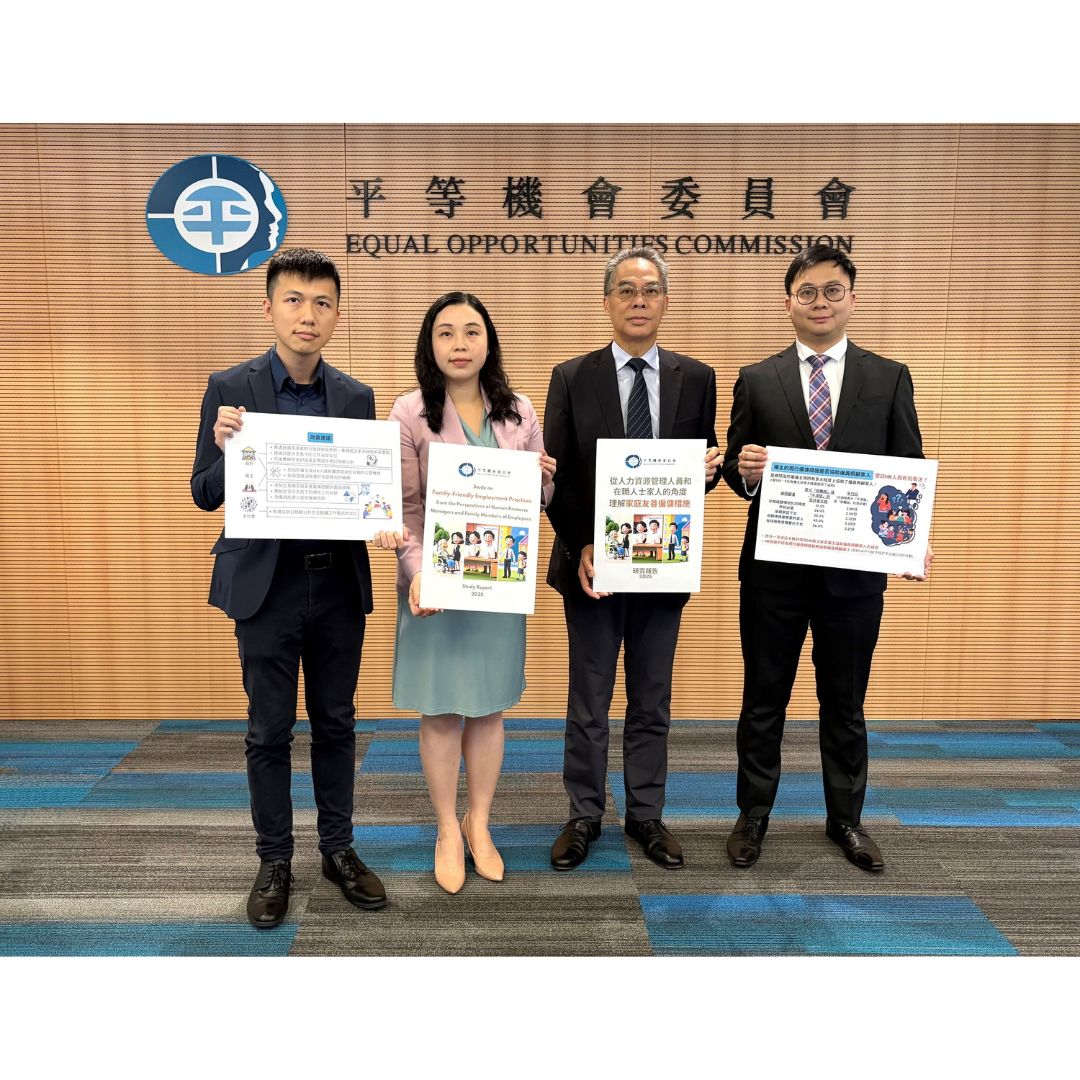
EOC releases findings of Study on FFEPs from the Perspectives of Human Resource Managers and Family Members of Employees
On 12 August 2025, the EOC held a press conference to announce the findings of Study on Family-Friendly Employment Practices (FFEPs) from the Perspectives of Human Resource Managers and Family Members of Employees (the Study). The research found that the surveyed family members of employed persons perceived a highly negative impact on balance of work and family life when employed persons were required to respond to work or be on standby outside regular office hours. In addition, around 90% of the surveyed Human Resources (HR) professionals reported that their organisations lacked guidelines or policies on family-friendly employment practices (FFEPs).
The Study included street or phone interviews with 1 000 family members of employed persons, an online survey of 400 HR professionals, and six focus group interviews with both HR professionals and employees’ family members.
The survey results from family members of employed persons showed that respondents spent an average of 26.5 hours per week on uncompensated family caregiving. 16% of respondents reported spending over 40 hours per week on uncompensated family caregiving, which was roughly equivalent to a full-time job. The respondents considered overnight work, working outside of office hours, answering calls, or being on standby as having a very negative impact on the balance between work and family life.
In the survey with HR professionals, 24% to 45% of the respondents were unsure whether the measures adopted by their employers were effective in supporting employees in taking care of family members with various needs. It also highlighted that 4% of the HR professionals reported that their organisations would ask employees to consider resigning if they requested additional leave for handling family affairs after they had exhausted their paid annual leave. Such practice could be unlawful under the Family Status Discrimination Ordinance.
Based on the findings, the EOC calls for a greater promotion of a culture to disconnect from work outside of work hours. It recommends employers to establish written policies on FFEPs to prevent unlawful acts. The Government should also lead by example and introduce more types of family leaves through incremental administrative measures and legislative refinements.
EOC Chairperson Ms Linda LAM Mei-sau said, “FFEPs allow employees with family responsibilities to balance work and family life through flexible work arrangements, which are beneficial to individuals, families, organisations and society as a whole. Not only do such practices foster greater understanding of those with family responsibilities in society, but they also help shape an inclusive workplace culture, enhance employees’ sense of belonging and efficiency, and encourage individuals with family responsibilities to rejoin the workforce.”
