


 EO Club Login
EOC releases new guide "Breaking Barriers: Insights from the EOC’s Cases"
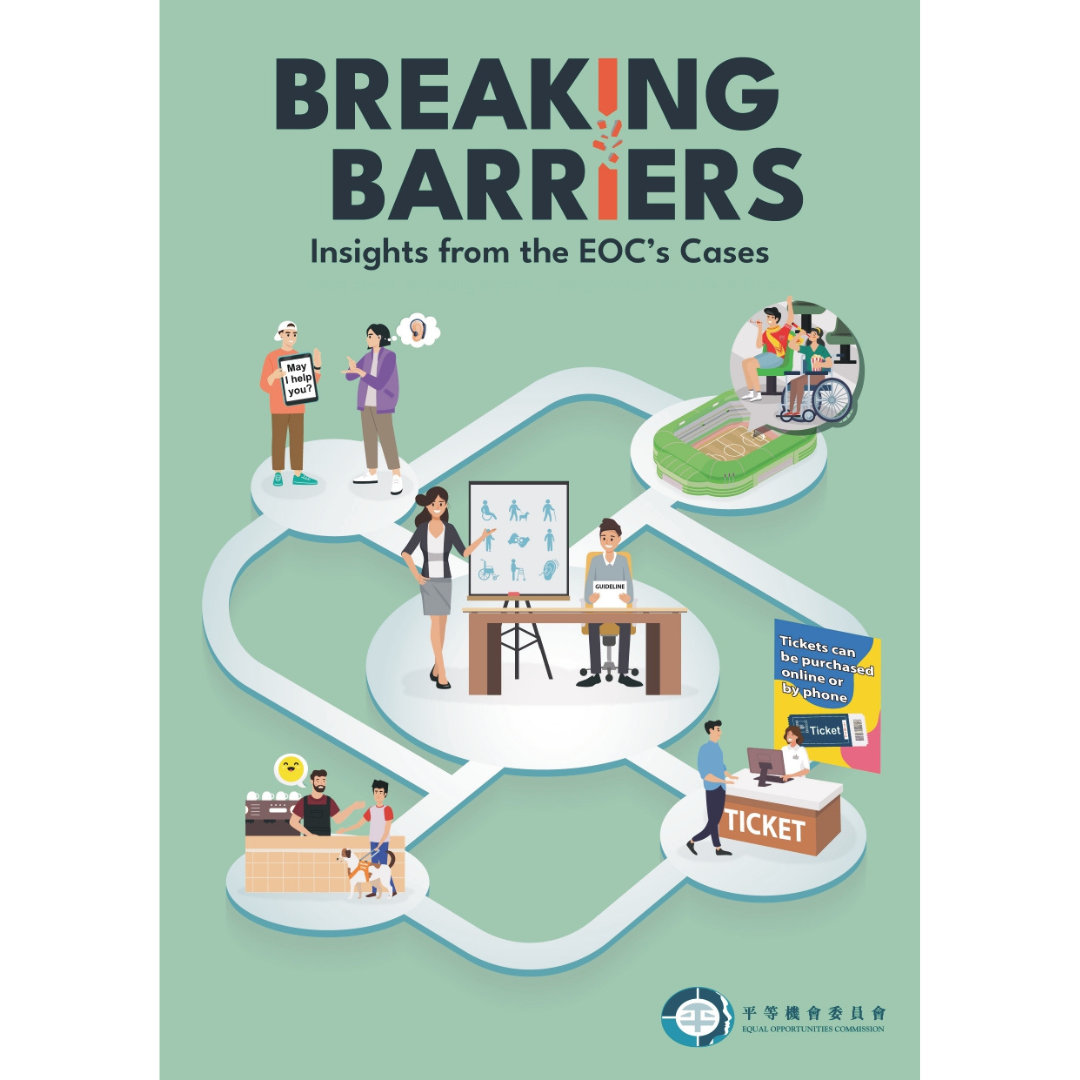
The EOC has released a new guide titled Breaking Barriers: Insights from the EOC’s Cases (the “Guide”), based on the first review the EOC has conducted of past complaint cases related to the Disability Discrimination Ordinance (DDO). It highlights common operational and attitudinal barriers and provides examples of complaint cases and practical recommendations.
The Guide was released alongside the launch of the Universal Design Award Scheme 2026/27 (UDAS). Ms Linda LAM Mei-sau, Chairperson of the EOC, said, “To build a truly inclusive and accessible society where everyone can participate equally, we must remove both visible barriers in the physical environment and invisible barriers that are rooted in operations and attitudes. Embracing the ‘user-centric’ approach advocated by universal design is essential. We hope that the Guide and the UDAS will complement each other to further encourage organisations to adopt universal design in both hardware and software, thereby building an accessible and inclusive city.”
To produce the Guide, the EOC conducted a review of DDO-related complaints for the first time to identify common operational and attitudinal barriers. It identifies 11 common types of operational and attitudinal barriers. Operational barriers include discriminatory or inflexible policies, lack of guidelines for serving people with disabilities, inadequate initial planning for accessibility, management and maintenance issues, barriers in online services, poor staff training and awareness and poor awareness of vicarious liability. Attitudinal barriers include refusal to provide service or assistance, unfriendly treatment, poor communication and lack of response to complaints.
The EOC proposes eight strategic recommendations in various aspects to facilitate service providers and premise managers in eliminating the root causes of these invisible barriers. They include reviewing internal policies to eliminate discriminatory practices, revising inflexible policies, improving accessibility planning and management, enhancing staff training and improving frontline communication skills. The EOC also recommends leveraging assistive technologies to enhance the participation of people with disabilities in daily activities, including the arts, cultural activities and sports.
